|
This page is for posting information about Rotuman communities anywhere in the world. If you have news about past or upcoming events, or happenings of special interest to members of the Rotuman community, please send the information via email to <ahoward@hawaii.edu> for posting. Postings can be either in Rotuman or English. We also invite commentaries about news stories. Sports news can be found at http://www.rotuma.net/sports/ Announcements of births, marriages, graduations and other life events can be found at http://www.rotuma.net/life_events |
The News |
From Pacific Media Network (18 November 2026) Rotuma backs Fiji constitutional changes but wants more powers, path to self-reliance District representatives demand stronger safeguards, clearer maritime boundaries and a deadline for Rotuma to become less dependent on the government.
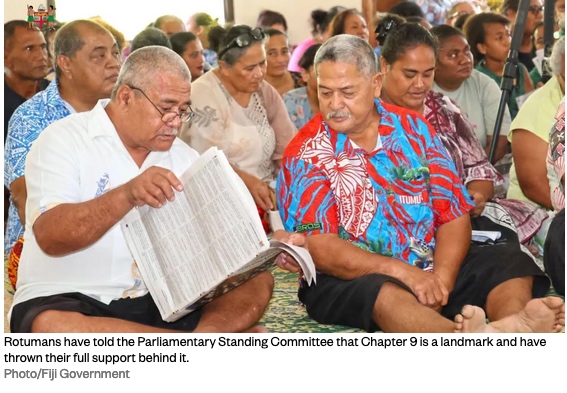
Rotumans have thrown their support behind Fiji’s proposed constitutional changes but island representatives are pushing for stronger guarantees over their powers, waters and future. Rotuma lies about 500 kilometres north of Fiji’s main islands, making it one of the country’s most remote communities. The island is about 650km by sea from Suva and just under 2000 people live on Rotuma. Submissions to the Parliamentary Standing Committee on the Constitutional Amendment Bill 2026 have welcomed a dedicated constitutional chapter for Rotuma while calling for changes to make those arrangements harder to weaken or overturn. One of the strongest calls came from Joane Varea from Oinafa, who said Rotuma should have a clear timeframe to become self-reliant. “I would recommend that a time limit of 10 to 15 years from the time the bill is passed in Parliament, we Rotumans should be able to stand on our feet,” she said “We cannot leave it open and continue to piggyback on the Fiji government all the time.”
Varea said greater self-reliance would not mean cutting ties between Rotuma and Fiji. She pointed to Tuvalu as an example of a small island nation standing on its own. “If Tuvalu can, with their small resources, stand on their own two feet, why can’t Rotuman people stand on their own two feet?”
The proposed Chapter 9 would give the Rotuma Island Council (RIC) responsibility for the island's internal government, administration and welfare. It would also give the council powers over peace, order and good governance, internal revenue, land and the island’s territorial and archipelagic waters and resources. But traditional leaders want to know what happens if the wider constitutional reform does not pass. District Chief for Itu'ti'u, Gagaj Vakatua, asked what legal protection would remain for Rotuma’s government arrangements and representation if the proposed bill fail. “If the comprehensive bill (32) of 2026 fails, which standalone legislative instrument could Parliament enact to the government provisions of Chapter 9? “If the bicameral structure featuring the Senate seat for Rotuma is rejected, what interim mechanism could secure guaranteed representation for the Rotumans in the interest of national policymaking?”
Revi Tiuhea of Malhaha also called for stronger protection of Rotuma’s constitutional arrangements including its waters. Tiuhea wants the Rotuma archipelago entrenched in administrative laws and jurisdiction, a 200- nautical-mile marine boundary under the Marine Spaces Act, and coordinates set out to clearly separate the island’s archipelagic waters from Fiji’s maritime zone. “I hope this bill will provide a lasting foundation for the protection and future of our people,” Tiuhea said. Under the proposed changes, the council would also have a role in protecting the Rotuman language, culture, customs, traditions and heritage. Government decisions on laws, policies or development affecting Rotuma would require the free, prior and informed consent of Rotumans, with the council deciding whether consent has been given. The State would also be required to provide adequate funding for the council. The proposed changes follow calls from the council for formal recognition of the island’s unique constitutional position. In its submission to the Constitutional Review Commission, the council described Rotuma’s relationship with Fiji as a “de facto” arrangement - “a marriage without a marriage certificate”. The council also sought protection against its powers being removed through ordinary legislation as well as a reserved parliamentary seat elected by Rotumans. But while the proposed amendments create a constitutional pathway towards independence, the council has made it clear that it is not seeking independence at this time. Under the proposed process, any move towards independence would first require a unanimous decision by the Rotuma Island Council after consultation with Rotumans. It would then require the agreement of the Fiji government, a referendum of Rotumans, a two-thirds vote of council members and a further constitutional amendment. From Fiji Sun (16 November 2026) Contestant celebrates heritage, advocates for the vulnerable Her advocacy, A Voice for the Voiceless, calls on communities to show compassion and support families facing hardship. By Waisea Nasokia
Eighteen-year-old Tristyn Mario hopes to use her voice to raise awareness of homelessness and hardship while celebrating her Rotuman and iTaukei heritage. She said competing in the Miss Sugar Festival 2026 was about more than wearing a crown. It was an opportunity to speak up for people whose struggles often went unheard. Ms Mario was among five contestants who took to the stage on opening night at Churchill Park in Lautoka. A student at the University of the South Pacific's Lautoka campus, she is using the pageant as a platform to promote compassion and draw attention to the challenges faced by people experiencing homelessness and poverty in Fiji. Her advocacy, titled A Voice for the Voiceless – Hope for the Poor and Homeless in Fiji, focuses on raising awareness and encouraging communities to support individuals and families facing hardship. "As a young woman, I believe I have a responsibility to use my voice for something meaningful," she said. "I believe that everyone deserves dignity, compassion and a place to call home." For Ms Mario, the cause is rooted in her belief that everyone deserves to be treated with dignity, regardless of their circumstances. Beyond her advocacy, she also sees the festival as an opportunity to celebrate the different cultures that have shaped her identity. Proud of her mixed Rotuman and iTaukei heritage, Ms Mario said her family roots connected her to the history, culture and traditions of both sides of her family. "On my father's side, my family roots trace back to the beautiful island of Rotuma. My paternal grandparents both originate from Kalvaka, Noa'tau. I also have links to Taukoi, Itu'ti'u, and Itu'muta," she said. "On my mother's side, I carry the heritage of the Traill family, whose roots trace back to the chiefly village of Levuka Vakaviti, Levuka Ovalau and Naroi, Moala in Lau." She said her heritage was an important part of her identity and something she was proud to represent. Ms Mario hoped her participation would encourage others to embrace their cultural identities while recognising the importance of helping those in need. "I am honoured to be part of the Miss Sugar Festival 2026, and I look forward to celebrating our cultures, embracing our diversity and inspiring positive change within our communities," she said. Away from her studies and festival commitments, Ms Mario enjoys outrigger canoeing, reading and travelling. She also likes trying new things and sharing experiences with others. The weeklong festival ends on Saturday with the crowning. From Fiji Broadcasting Co. (10 November 2026) Dry spell breaks decades-old records By Litia Cava The Fiji Meteorological Office says El Niño-driven conditions have severely suppressed rainfall nationwide, leaving 26 of 27 monitoring stations with well-below-normal totals. Rotuma recorded its lowest October rainfall in more than a century, receiving only 29.2 millimetres compared with its previous record low of 80 millimetres in 1914. The Meteorological Office states that the suppressed rainfall is typical of El Niño conditions, which are continuing to influence weather patterns across the country. With dry conditions already affecting agriculture, water supplies and rural communities, the latest figures show the extent of the rainfall deficit heading into the final months of the year. From Fiji Sun (31 October 2026) Fuel, LPG prices to surge from tomorrow By Inoke Rabonu Motor spirit prices will jump by 55 cents a litre across most of Fiji from tomorrow, November 1, as households, businesses and transport operators face sharp increases in fuel and cooking gas costs. The Fijian Competition and Consumer Commission (FCCC) announced the new prices today, October 31, following a rise in international fuel prices driven by geopolitical tensions in the Middle East and the Russia-Ukraine war. On Viti Levu, in areas within three kilometres of a public road, motor spirit will increase from $3.15 to $3.70 a litre, while diesel will rise by 46 cents, from $3.41 to $3.87. In Rotuma, motor spirit will rise to $4.29 a litre, diesel to $4.47, premix to $4.21 and kerosene to $3.87. On Taveuni, a 12kg cylinder of cooking gas will cost $46.42, while consumers in Rotuma will pay $56.28, an increase of $1.42. From Fiji Broadcasting Co. (30 October 2026) Fisheries consultations reach Rotuma By Josefa Sigavolavola
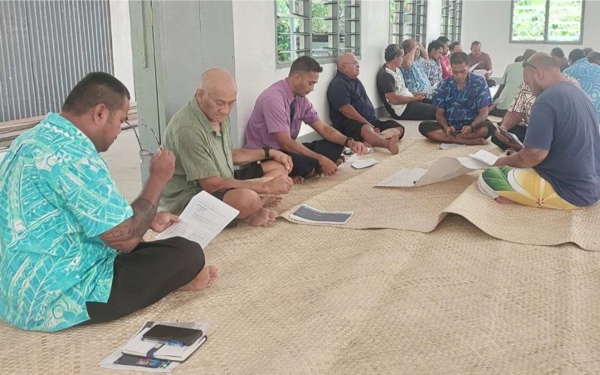
The Ministry of Fisheries has continued its nationwide consultations on the proposed Inshore Fisheries Management Bill and Community Based Fisheries Management framework, holding discussions in Rotuma with about 50 participants at the Malahaha District Hall. Participants included the Chairman of the Rotuma Council and District Chief of Itumuta, Gagaj Manav, District Chief of Itutiu, Gagaj Vakatua, government officials, traditional leaders, fishers and farmers from districts across the island. The consultations focused on gathering community views on the proposed legislation and fisheries management approaches. Ministry officials highlighted the importance of Rotuma’s participation, noting that the island’s customary fishing rights and administration operate under the Rotuma Act and Rotuma Lands Act, making its perspective significant in the development of the Bill. The Rotuma Council is expected to submit a formal response on behalf of the island’s communities. Consultations in Rotuma will continue until November 4 as part of the Ministry’s efforts to engage coastal communities in the management and protection of inshore fisheries resources, food security and livelihoods. From Fiji Broadcasting Co. (26 October 2026) Rotuma seeks land rights protection By Sainiani Boila Rotuma is calling for its cultural identity, traditions, and land rights to be protected under Fiji's proposed Constitution. Chair of the Rotuma Island Council, Gagaj Samuela Manav, says the review provides an opportunity to ensure the island's traditional values and rights are safeguarded in the country's supreme law. Speaking during constitutional submissions in Rotuma Gagaj Manav called for the island and its people to be protected under the new supreme law. "This review process is of paramount importance. It offers a critical avenue to ensure that our unique cultural identity, traditional governance system, and customary land rights are robustly recognized, respected, and protected within the national constitutional framework." Manav says the Constitution serves as the foundation of a just society, protecting rights, safeguarding institutions, and shaping the future of upcoming generations. He adds that consultations in Rotuma show the importance of ensuring every community can contribute to shaping the country's constitutional future. From Fiji Broadcasting Co. (2 October 2026) Rotuma's incinerator wait continues By Rakesh Kumar ROTUMA will have to wait for its own hospital incinerator, with the Government prioritising five other sites before extending incinerator capacity to the remote island. Minister for Health Dr Ratu Atonio Lalabalavu told Parliament on Tuesday that Rotuma was among the facilities planned to eventually receive an incinerator, but no specific timeframe was given for its construction. "The plan is to have all subdivisional hospitals with their own incinerator capability," Dr Lalabalavu said. For now, clinical and hazardous waste from Rotuma Hospital is transported to the Biosecurity Authority incinerator on the island for destruction, with the health team providing fuel to Biosecurity to support the process. General and non-hazardous waste was instead taken to the local community dump. Opposition MP Joseph Nand pressed the minister for a timeframe on when Rotuma's incinerator would be built. Dr Lalabalavu said the Government's immediate priority was Naboro, Sigatoka, Rakiraki, Taveuni and Kadavu. "After those facilities are done, then we can move onto Rotuma and other facilities that do not have incinerator capabilities." He said completed work at Naboro was awaiting approval for installation of the incinerator unit, while Sigatoka had secured environmental approval and funding for construction and procurement this financial year. Dr Lalabalavu said Rakiraki remained in the environmental impact assessment phase, while environmental management plans for Taveuni and Kadavu had been approved. From Fiji Broadcasting Co. (2 October 2026) Constitution Bill opens pathway for Rotuma independence By Apenisa Waqairadovu A new constitutional pathway could allow Rotuma to begin a process that could eventually lead to it becoming an independent state. For the first time, the proposed Constitution gives Rotuma its own dedicated constitutional chapter. Clause 154 recognises Rotuma as a “sovereign indigenous entity within the Republic of Fiji” and recognises the Rotuman people as a sovereign indigenous people of Fiji, with their own language, culture, traditions and land-tenure rights. The proposed Constitution also gives the Rotuma Island Council powers for the internal government and administration of Rotuma. Importantly, Clause 156 creates a specific “right to initiate an external self-determination process.” Under the provision, the Rotuma Island Council could, after consulting the Rotuman people, unanimously resolve to begin consultations with the Fiji Government on the possibility of Rotuma becoming an independent state. However, that resolution would not make Rotuma independent. The Bill sets out several further requirements. There would first have to be a cooperative consultation process between Rotuma and the Fiji Government. The Government would then have to formally agree to independence. A referendum would have to be held to determine the majority view of the Rotuman people. At least two-thirds of the members of the Rotuma Island Council would also have to vote in favour. And the Constitution itself would have to be amended to give effect to independence. This is a significant departure from the current constitutional framework. The 2013 Constitution does not contain a dedicated chapter giving Rotuma a constitutional pathway to independence. Rotuma’s governance is instead provided for through legislation, including the Rotuma Act. The proposed Constitution therefore moves Rotuma’s position from being primarily a matter of ordinary legislation to one with specific constitutional recognition, autonomy provisions and an expressly defined self-determination process. The Bill also gives the Rotuma Island Council a strong role in any future constitutional changes affecting Rotuma. Under Clause 210, a Bill affecting Chapter 9 or constitutional provisions relating to Rotuma or Rotuman people cannot even be introduced into Parliament unless it has first been approved by a two-thirds vote of the Rotuma Island Council. From Fiji Broadcasting Co. (24 September 2026) Remote facilities gain reliable power By Riya Mala Remote health facilities are getting more reliable power, helping strengthen healthcare services in some of Fiji’s most isolated communities. Rotuma Hospital is now Fiji’s second fully solarised Subdivisional Hospital, with a 40-kilowatt system. From Fiji Times Online (23 September 2026) Draft Constitution opens pathway for Rotuma to seek independence By Anish Chand Rotuma would be given a constitutional pathway to begin a process towards becoming an independent state under Fiji's proposed 2026 Draft Constitution. The provision allows the Rotuma Island Council (RIC), following consultation with the Rotuman people, to unanimously resolve to initiate discussions with the Fiji Government on the possibility of independence. Such a resolution would allow the RIC to formally notify Government and enter into good-faith consultations. However, initiating the process would not automatically result in independence. Under the Draft Constitution, Rotuma could only become independent if several conditions were met, including a cooperative consultation process and the formal agreement of the Fiji Government. A referendum would also have to be conducted to determine the majority view of the Rotuman people, while at least two-thirds of RIC members would have to vote in favour of independence. Finally, Fiji's Constitution itself would have to be amended before Rotuma could become an independent state. The draft also proposes significant internal self-government powers for Rotuma. The RIC would be responsible for Rotuma's internal government and administration and the welfare of its inhabitants. Its proposed powers include making laws and regulations covering peace, order and good governance, internal revenue raising and the management of Rotuman land and associated territorial and archipelagic waters and their resources. The RIC would also have responsibilities for protecting and transmitting Rotuman language, culture, customs, traditions and heritage. Significantly, Government decisions on legislation, policy or development applying to Rotuma would be subject to the free, prior and informed consent of the Rotuman people, with the RIC determining whether that consent had been obtained. The State would also be required to provide adequate funding for the RIC to exercise its functions and support infrastructure and other development agreed to by the Council. The provisions are contained in the 2026 Draft Constitution released with the Constitution Review Report and remain proposals rather than law. |